

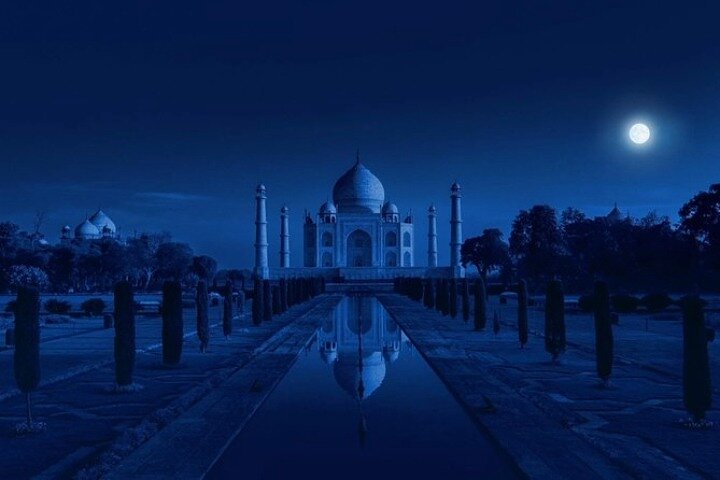
Taj Mahal Full Moonlight Experience – Complete Guide to Seeing the Taj Mahal Under the Moon
There are moments in travel that stay with people forever, and witnessing the Taj Mahal during a full moon night is one of those rare experiences. During the daytime, the monument is grand and crowded, admired for its beauty and history. But under the full moon, the Taj Mahal transforms into something far more emotional, peaceful, and unforgettable.
The white marble begins reflecting soft silver light, the atmosphere becomes quieter, and the monument almost appears to glow against the night sky. It feels less like a tourist attraction and more like a dream standing silently beside the Yamuna River.
For travelers planning to experience the Taj Mahal Full Moonlight experience, this detailed guide covers everything — including timings, ticket information, best viewing dates, photography tips, history, visitor rules, weather conditions, and why moonlight viewing is considered one of the most magical experiences in India.
What is the Taj Mahal Full Moonlight Experience?
The Taj Mahal full moonlight experience is a special nighttime viewing opportunity that allows visitors to see the monument during selected moonlit nights every month.
Unlike regular daytime entry, night viewing is available only for a limited number of visitors and only on specific dates close to the full moon. This controlled experience is organized by the Archaeological Survey of India (ASI) to preserve the monument while allowing travelers to witness its beauty under natural moonlight.
The experience is completely different from daytime sightseeing. Instead of loud crowds and busy pathways, visitors experience calm surroundings, cool night air, and the soft reflection of moonlight across the white marble structure.
This rare atmosphere is what makes the Taj Mahal full moonlight visit so famous around the world.
Why Does the Taj Mahal Look Different During Full Moonlight?
One of the biggest reasons people travel from around the world for this experience is the unique way the Taj Mahal reacts to moonlight.
The monument was built using high-quality white Makrana marble, known for its ability to reflect changing light throughout the day. During sunrise, the marble appears pinkish. During daylight, it looks bright white. During sunset, golden shades begin appearing.
But during a full moon night, the marble reflects silver and bluish tones that create a glowing effect across the entire structure.
The result feels almost unreal. The calm surroundings, reduced crowds, and natural moonlight together create a peaceful atmosphere that many visitors describe as:
- Romantic
- Spiritual
- Dreamlike
- Emotional
- Once-in-a-lifetime
This transformation is the reason the Taj Mahal full moonlight experience is considered one of the most beautiful nighttime attractions in India.
When Can You See the Taj Mahal During Full Moonlight?
The Taj Mahal is not open every night for moonlight viewing. Night viewing is usually allowed for only five nights every month:
- Full moon night
- Two nights before the full moon
- Two nights after the full moon
The full moon night is considered the most special because the brightness of the moon creates stronger reflections on the marble surface.
However, availability may occasionally change due to:
- Weather conditions
- Government guidelines
- Security reasons
- Religious observances
- ASI restrictions
This limited access is one of the reasons why tickets often become difficult to get near full moon dates.
Taj Mahal Full Moonlight Timings
The night viewing experience generally takes place after sunset in multiple entry batches. Each group receives a limited viewing duration, and visitors are required to follow their assigned reporting time carefully.
Since security arrangements are strict, travelers should:
- Arrive early
- Carry valid identification
- Avoid restricted items
- Follow official instructions
The entire process is organized to maintain safety, crowd control, and monument protection.
How to Book Taj Mahal Full Moonlight Tickets
Booking tickets for moonlight viewing is different from purchasing normal Taj Mahal entry tickets. Since visitor slots are limited and demand remains high throughout the year, advance booking becomes extremely important.
Many travelers prefer booking through trusted local travel providers who assist with:
- Ticket reservations
- Slot availability
- Entry coordination
- Local guidance
- Agra travel assistance
Advance booking is especially recommended during:
- Winter season
- Full moon dates
- Tourist holidays
- Weekend travel periods
Visitors usually need:
- Valid ID proof
- Passport details for foreign tourists
- Preferred date
- Contact information
Early planning helps secure better slots and avoids last-minute stress.
What Makes Full Moonlight Viewing So Special?
The biggest difference between daytime visits and moonlight viewing is the atmosphere. During daytime hours, the Taj Mahal often feels crowded and busy. Under the full moon, the monument becomes calm and elegant.
The moonlight creates soft reflections on the marble surface, highlighting intricate details that many visitors do not notice during the day. The cooler nighttime weather also makes the visit more comfortable, especially during warmer months.
For couples, photographers, solo travelers, and history lovers, the experience often feels deeply personal and emotional.
The History Behind Taj Mahal Moonlight Beauty
The Taj Mahal was built by Mughal Emperor Shah Jahan in memory of his wife Mumtaz Mahal. The monument symbolizes eternal love and remains one of the finest examples of Mughal architecture ever created.
Historically, the Taj Mahal has always been admired for the way it changes color with light. Travelers and poets for centuries described how the monument looked almost magical during moonlit nights. Over time, the ASI introduced controlled night viewing sessions so visitors could safely experience this unique beauty while preserving the monument.
Today, the full moonlight viewing experience continues attracting travelers from across the globe.
Best Season for Taj Mahal Full Moonlight Viewing
Although moonlight viewing takes place throughout the year on selected dates, some months provide a much better experience.
October to March – Best Time
This is considered the ideal season because:
- Weather remains pleasant
- Sky visibility is usually clearer
- Humidity stays lower
- Moonlight reflections appear sharper
April to June – Summer Months
Summer nights remain beautiful, although daytime temperatures in Agra can become very hot before the viewing session begins.
July to September – Monsoon Season
Cloud cover and rainfall may sometimes reduce moon visibility during the monsoon period.
Winter full moon nights are generally considered the most photogenic and comfortable for travelers.
Photography Tips for Taj Mahal Full Moonlight
Capturing the Taj Mahal at night requires patience and proper timing. Some useful photography tips include:
- Use low-light settings
- Keep your camera stable
- Avoid harsh flash
- Capture reflections and shadows
- Arrive early for better viewing spots
Even smartphone cameras can produce stunning images during clear moonlit conditions. However, visitors should always follow the latest photography rules issued by authorities.
Important Visitor Guidelines
Since the Taj Mahal full moonlight experience is carefully regulated, visitors must follow all official rules. Important things to remember:
- Carry valid photo ID
- Reach before reporting time
- Cooperate during security checks
- Avoid carrying restricted items
- Follow staff instructions carefully
Traveling light usually helps speed up the entry process.
Is the Taj Mahal Full Moonlight Experience Worth It?
Absolutely. Many travelers who have visited the Taj Mahal both during the day and at night often say the moonlight experience feels more memorable.
The peaceful surroundings, glowing marble, cool air, and emotional atmosphere create something far beyond ordinary sightseeing. It becomes less about taking photos and more about experiencing the monument emotionally.
For many visitors, it feels like seeing the Taj Mahal the way it was truly meant to be admired.
Why Travelers Prefer Night Viewing Over Daytime Visits
There are several reasons why travelers increasingly choose moonlight viewing:
- Smaller crowds
- Better atmosphere
- Cooler weather
- More romantic experience
- Better photography opportunities
- Exclusive access feeling
Since only limited visitors are allowed each night, the experience feels more premium and personal compared to daytime tourism.
Tips for First-Time Visitors
If this is your first Taj Mahal moonlight visit, these tips can improve your experience.
Book Early
Tickets often become difficult to get close to full moon dates.
Dress Comfortably
Evenings in Agra can become cool during winter months.
Carry Minimal Belongings
Security checks are strict, so travel light whenever possible.
Check Weather Forecast
Clear skies improve moonlight visibility significantly.
Arrive Early
Reaching before reporting time helps avoid unnecessary stress.
Take Time to Enjoy the Experience
Many travelers focus only on photography and forget to enjoy the atmosphere itself.
Why the Taj Mahal Full Moonlight Experience Feels Emotional
There is something unique about seeing a monument built as a symbol of love under natural moonlight. The silence of the night, the glowing marble, and the reflection of the moon together create an atmosphere that feels timeless.
Unlike daytime tourism, moonlight viewing feels slower and more meaningful. Visitors often spend the experience quietly observing the monument instead of rushing through it.
That emotional connection is what makes this experience unforgettable for so many travelers.
Final Thoughts
The Taj Mahal is already one of the most admired monuments in the world, but experiencing it during full moonlight reveals an entirely different side of its beauty.
The glowing white marble, peaceful surroundings, and magical atmosphere create a travel memory that few places on Earth can match.
Whether you are a first-time visitor, photographer, history lover, or someone looking for a romantic experience, the Taj Mahal full moonlight experience offers something truly special.
It is not just about seeing the Taj Mahal at night — it is about experiencing one of the world's greatest monuments in its most beautiful and emotional form.
